Friday, June 23, 2017

Deutschland Dispatch # 4: I Love Freiburg

One of the old town gates of Freiburg.  The site of a medieval with hunt.
Freiburg, Germany immediately felt familiar to me, as I would compare it to my city of Asheville, NC.  It is located on a river, in the middle of the famous Black Forest.  Just 20 minutes from France, it is well known as an outdoors Mecca of sorts, attracting hikers, kayakers, students, and liberal types from all over Germany.  They lead Germany in sustainable living, which we took in first hand by touring the communities of Vauban, and St. Peter - each of which are two of the most environmental friendly communities in Europe.  We were also fortunate enough to hike through the Black Forest (home of Hansel and Gretel) and learn about the massive wind turbine that provide much of the energy for the area.  It was beautiful ( and reminiscent of home), as well as inspirational.


In addition, Freiburg is a university town, and it shows.  The University of Freiburg brings in thousands of young people, who populate the town with an amazing energy.  In the evenings, as we strolled through the city in search of more ice cream, we were inundated with young students who sat with their bare feet in the shallow water channels, or bachle (which are about 2 feet wide, 6 inches deep, and run throughout the old city, apparently for fire fighting in the Middle ages), drinking beverages and talking.

Market day at The Freiburg Cathedral
It was during our stay in Freiburg that our group truly hit our sweet spot, and we all came to absolutely love the city.  By that point, we had all been together for 3-4 days, and we fell into a groove with each other.  Travelling became easier, and it was clear to all who among us was best with German translations, map navigating, or filming.  Folks were able to recognize other people who traveled at their respective pace, or who enjoyed similar activities. Everyone consistently demonstrated a touch of grace with each other (which was especially impressive in the 90 degree heat, with no AC), and hugs became much more common in Freiburg.

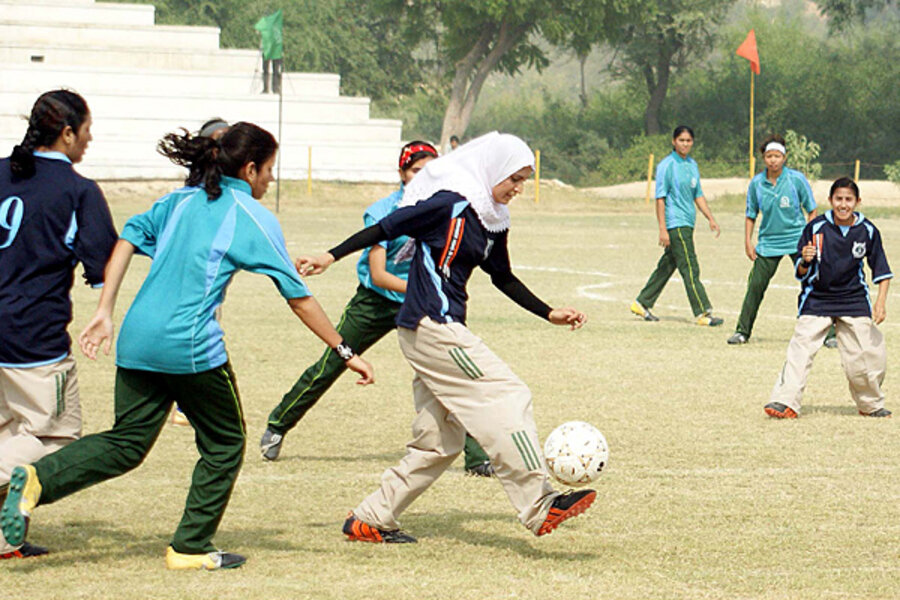
Language Barrier?  Soccer makes it all okay.
We attended numerous lectures at the university, and the heat was (unfortunately) sweltering.  That said, we all received numerous perspectives on the German education system (from teachers, university professors, and students) - and this provided a perfect catalyst for rich discussion among all of us. Notably, while at the University we were introduced to students who were recent refugees from Syria, Afghanistan, and Iraq.  We listened to their stories, and learned more about the German government's decision to welcome millions of refugees in 2015.  We then had lunch together, wherein I once again learned that when a common language is a challenge (my German is awful, and they are still learning English) - you talk about soccer, which we did (For those of you keeping score at home, they cheer hard for Real Madrid and Bayern Munich, respectively - though all of us agreed on the merits of Messi)...and it was awesome.
Black Forest

And therein lies the brilliance of this professional development: take 28 qualified teachers to a foreign country, provide them opportunities to learn about schools, and create space for discussion and reflection.  at its end, you will have 28 teachers who return home with new ideas, criticisms, and inspiration for their classrooms.  If your lucky (which I have been), they return home as great friends as well.


The Bachle of Freiburg


Thursday, June 22, 2017

Deutschland Dispatch # 3: Stuttgart and Herrenburg

Herrenberg.
I confess that for as much as I appreciated my three days in Berlin, I was ready to travel to a different part of Germany.  We flew to Stuttgart in the early morning, and immediately attended a meeting with the minister of education for the state of Baden-Wutenburg. It was extremely informative (though extremely hot).

Stuttgart
Afterwards we spent some time in the center of the old city. There we visited the old castle (13th century). It was so fun to watch the mood of our group shift dramatically- taking more pictures, and generally showing so much excitement for these truly historic parts of Germany.  Stuttgart very much fulfills the traditional paradigm of an old European town, and we all recognized that we were no longer in ( the more international and modern) Berlin.

Our visit to Gymnasium was enjoyable, as we were able to meet with teachers and students for quite a while.  I felt very much at home at this school, as I was able to meet Jonathon, who teaches tenth grade geography.  Being in his class with 16 year old German kids was like being at any given day in my class. The students asked great questions about the USA, including  “Does everyone carry a firearm?”  We talked a lot about how large and diverse the USA is, usually discussing the differences between Texas and NYC.


But the greatest discovery of our trip came in the evening as we ended up in the small town of Herrenburg (founded, 1278), due to a last minute hotel switch. A few of us decided to walk through the town, where we discovered an amazing medieval town, complete with immaculate houses, narrow streets, and a cathedral with a glockenspiel. We took in the sunset, grabbed an ice cream cone, and explored.

As John Lennon said, “Life is what you get when you don't get what you expected.”

And he was the walrus, so who am I to question it?

Deutschland Dispatch #2: Berlin

Starting our trip in Berlin has been an intriguing experience. As much as I love being in a European capital, Berlin has a unique spirit about it ( which was easy to understand, as EVERYTHING is in English). Exploring the city with the group (i.e: navigating the U-Bahn, language barrier, and trying new foods) made for quick bonding, inside jokes, and friendships forged. I am quite sure that these new relationships will be my most valued souvenir from this trip.


Though I loved seeing the remnants of the Berlin Wall, the Reichstag building, and the amazing parks, the city carries a heavy, heavy weight of history. Specifically, the Soviet influence on Berlin remains palpable. The socialist architecture, sculptures of Karl Marx, and memorials (specifically at Treptower Park) are all a testament to the historic influence of the USSR.

At the same time, what most impressed me about Berlin was the German people's eagerness to embrace their history (to the point of even preserving the Soviet graffiti in the Reichstag building from the fall of Berlin in 1945), and tirelessly shine a light on the horrors of their Nazi past. Not once did I witness a “whitewash” of history in Berlin.  Instead, I experienced a consistent willingness to engage with that past, and to emphatically say “never again.”  I am so impressed, and it is a lesson from which all of us can learn.

Traveling with 27 other public school teachers with Go Global NC is refreshing. Being surrounded by teachers who care deeply about the craft is always inspiring, and this trip is no exception. But visiting the JFK School in Berlin illicited such great conversations with my new friends about teaching, and new perspectives. Seeing how the Germans “do school” is every bit as interesting and informative as I hoped it would be.

 I left Berlin with more questions about our education system, a deep respect for the German people's historic self-awareness, and (most importantly) 28 new friends.

On to Baden-Wurtenburg...

Deutschland Dispatch #1: Why Germany?

Why travel to Germany?

On day one, sitting in the Newark airport, looking at pictures of my two boys at the pool - I confess that I am struggling to remember why I chose to leave for ten days, and travel to Germany. As I have never been away from my family for this length of time, it stings. But I will push on, because man I love to travel. I love it all: the moving sidewalks, bad food, security weirdness- it is my jam.

So, Why am I going on the trip anyway?

 1. Because William Faulkner says “the past is never dead. It Isn't even past.”  To understand our world, we have to live it. What we are experiencing today will tomorrow be the past, so we must drink deep. Traveling to Germany is a huge step in that effort.

2. To teach it , we have to model it. It is my hope that my students see the world as something amazing to explore. At the core, I intend to return to my classroom with a fresh experience that I can share with my students.

3.  I have taught for 17 years. At this point, it is crucial that I consistently find new catalysts for inspiration. Never one to rest on my laurels, this trip is already turning my gears. Meeting so many of these great teachers from across NC, and seeing a new country is just the ticket to help me grow as an educator.

So here's to Deutschland!!  And here's to growth...

Monday, June 5, 2017

Building a Culture

How to we build a classroom culture?  And how important is it?
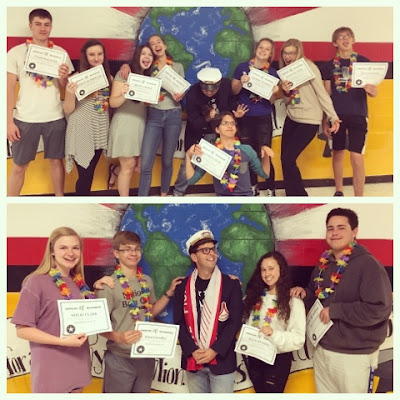
2017 Champions League

Over time, I have come to believe that any teacher can avoid numerous daily classroom issues, as well as create fertile ground for inspiration, if we can successfully create an environment in our classrooms that rewards creativity and curiosity, while empowering students to take on leadership roles.

Culture starts with our ability to establish social norms and values.  Once we have made clear to our students what will be valued and rewarded, and what will not be tolerated - we can begin the long process of "selling the vision" to our students.  If nothing else, we must be great salespeople.  We must never forget that our ability to create buy-in from our students will create the culture to which we aspire.

In my experience, the experts in this field (of building a culture) are summer camps.  Daily, summer camp staffs figure out creative ways to engage kids, and they are adept at creating a culture that rewards community, friendship, and fun.  They use games, music, and entertainment.  They make camp t-shirts, and have meals together.  So, I am a firm believer in this model - and have not only drawn inspiration from it, but worked diligently to translate it into my classroom (though not always successfully).

I have tried to institute this in numerous ways, below are examples:


Be Yourself/Authenticy:
The first step in building a classroom culture is to make sure that I am being true to myself.  As the leader, and the person who sets the core values in the room - it is most crucial that my students know me, and understand that I do not mind making mistakes, being ridiculous, or laughing at myself.  In addition, I incorporate my personal;l interests into my class, modeling my passions for the students.  My hope is that each student will feel free to be him/herself - and will bring his/her individuality and gifts to our community each day.


Praise Academic Prowess/High Standards:
Concerning academic rigor and accomplishment, I use "The Champions League" and public distribution of "high score candy."  Named for the elite European Soccer tournament that only includes the best teams form each European nation, I created it to reward students who score an A on all five of the AP World History Thematic (Unit) Exams.  The Champions League is quite an accomplishment.  To that end, We make a HUGE deal out of it - posting the list of students in public, and hosting a ceremony at the conclusion of the class (which we just did this past Friday) to hand out certificates and prizes.  We play awards show music, and just generally celebrate these kids and their accomplishments.

Use the Senses:
Culture needs to be all encompassing, and it must be a sensory experience.  To that end, I use classroom murals, and a constant barrage of music, whenever possible.  I use my guitar to teach, and we sometimes learn class dances, depending on the lesson. Typically, we start class with a song on the stereo - as it sets the tone.  We also identify one song per year to act as the "quiz song."  (This means that whenever this song is played, we will have a quiz at its conclusion).  This year's Quiz Song?  Kung Fu Fighting - Carl Douglas ( For the record, Quiz songs by year: 2016 - You Make My Dreams Come True, Hall & Oates, 2015 - Hooked on a Feeling - Blue Suede, 2014 - Low Rider, War, 2013 - Austin Powers Theme, etc.)

Class Historians/Value the Past:
To ensure cultural memory, we choose class historians.  These students (selected by their classmates) are in charge of documenting any and all moment throughout our class that are significant.  Other students will often instruct these historians to write down certain things that are particularly funny, or meaningful,  in our time together.

Make a Shirt/Tell Your Story:
At the end of my AP World History class, we make the class t-shirt.  The cumulative work of the class historians is documented on the back of the class t-shirt, acting as a historical document of our time together.  This helps instill a sense of pride in what we have created.  It also helps remind us of our strengths, and our community, for years to come.

Teamwork, Play Games Together:
In my class, we play games...a lot.  The most notable one is the Grahammys (G.G.R.ammys), a days long review game that tests one's academic, trivial, physical, and performance abilities.  The students compete on teams, and choose names.  It scores build over the semester - but more importantly, it builds friendships, rivalries, and community.  We also go outside to play games like World Cup, Capture the Flag, or egg toss, depending on the lesson.
NBHS Students at Ellis Island, NYC

Class Field Trips:
At the conclusion of each year, we take our AP History classes on a massive field trip to a place as far from our own culture as possible.  Essentially, it is a challenge project to help our students see new places, and empower each of them to gain confidence.  We strongly encourage all of our students to go, and it helps build an environment of tolerance, and leadership.  We have traveled to Chicago, Philadelphia, DC, New Orleans, Atlanta, Montgomery, Baltimore, and New York City.

Eat Together:
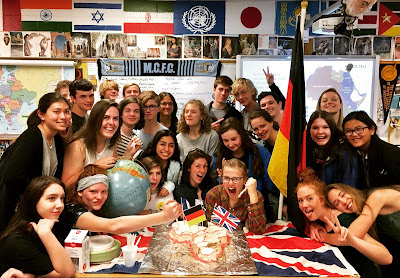
Food brings people together.  So, whenever is is called for, we eat together.  From the cake of Africa, to the cultural guidebook project - we try to incorporate food into our days.

And this stuff ( above) will not always work.  Sometimes none of it will work.  And so we have to be willing to change, and find new ways to build a culture....which remains the most important tenet in building a culture.


Friday, May 26, 2017

New. York. City.

84 Teenagers in NYC.  It was amazing.

Half of us at St. John the Divine

Ellis Island Museum

Strawberry Fields, Central Park

China Town

Brooklyn Bridge

Wall Street

We successfully moved 84 students through the NYC Subway...TWICE

The Guggenheim Museum


Thursday, May 4, 2017

The World Cup {Its in the Curriculum now!}

In a serendipitous series of events, the College Board added the World Cup to the "list of things to cover" for the AP World History Exam.  I, being a lifelong soccer fan, have been more than pleased to teach world history through the lens of the beautiful game.  And most of my dear students are probably sick and tired of hearing my comparisons of all things historic to either rock bands or soccer teams, but alas - I have a good reason to talk soccer now.

So, for those who may not know, the World Cup is an international soccer tournament held once every four years.  It was created (like the modern Olympic movement in 1896) in 1930 to be a peaceful way for nations to interact and compete.  Before 1800, soccer (er, football) had only been played formally in Britain (where it was invented).  But by 1900, the British Empire had conquered almost 25% of the earth, bringing with them their laws, tea, Christianity, Cricket, and...Soccer.  While Cricket continues to be the most popular sport in India and Pakistan, soccer (with its simplicity) took over the world.


Nowadays, soccer is the world's game.  Not only is it easily the most popular sport on earth - but it most often acts as a great "international language" of sorts, enabling people from all across the world to come together in peace.  My youngest son knows more players from Africa and Latin America, than he does from North Carolina.  

In addition, the World Cup provides a chance for developing countries (and the B.R.I.C. countries) to compete on the international stage.  (Point in fact, Brazil leads with five WC titles, followed by Germany and Italy with four, and Argentina and Uruguay with two each).

This has resulted in many countries angling to host the World Cup, as it is the world's most viewed event for one month.  And countries who are currently looking to extend their international profiles have been the most recent hosts, including South Africa (2010) Brazil (2014), and Russia (2018).  To be fair, the Olympics, Cricket, and even (the growing international popularity of) Basketball play similar roles in the world now.  But soccer remains undefeated, and the World Cup remains the crown jewel.

Featured Post

What is Punk Rock Pedagogy?

The most valuable preparation that I ever received for teaching history in a public high school was from punk rock bands.  Growing up in Win...